GPS Data in Football: Metrics That Matter for Player Development
Modern football GPS systems generate dozens of metrics, and the number on the screen can be overwhelming. The good news: coaches only need to master a handful of numbers to make better decisions. This article explains the GPS metrics that matter most for player development, in plain language.
Total Distance
Total distance is the foundation — the number of metres a player covers in a session or match. It tells you the overall volume of work. A youth midfielder might cover 8-10 km in a match; a goalkeeper far less. Compare distance against position, age and the player's own history rather than against teammates. Sudden drops in distance are often an early sign of fatigue, illness or low motivation.
High-Speed Running
High-speed running (HSR) is distance covered above a speed threshold, typically around 19-21 km/h for adults and lower for youth players. HSR is the metric most closely associated with match demands and injury risk. Because it is hard to produce, it is also the first thing to drop when a player is tired. Tracking HSR week to week tells you whether a player is maintaining the physical output their position requires.
Sprint Distance and Sprint Count
Sprints are the fastest efforts — usually above 25 km/h for adults. Sprint count and sprint distance show how often a player produces maximal efforts. This matters for development because sprinting is a trainable quality that many young players do not get enough of in normal training. If a winger is sprinting only a handful of times per session, the coach has a clear development target.
Peak Speed
Peak speed is the fastest speed a player reaches in a session — their personal top gear. It is a useful benchmark for speed development: players can chase personal bests in controlled sessions. It also helps with return-to-play decisions, because a player coming back from injury should not be expected to hit full speed immediately.
Accelerations and Decelerations
Football is a game of stopping and starting. Accelerations and decelerations (often measured with the IMU, since GPS alone struggles with short explosive movements) capture the repeated braking and propulsion that tire players and strain muscles. A 1000Hz IMU measures these far more accurately than older sensors. High acceleration counts are associated with muscle injury risk, so this metric matters for load management.
Meters per Minute
Meters per minute (m/min) is distance divided by active time — the intensity of a session. Two sessions can have the same total distance but very different intensity. m/min helps coaches design sessions: high-intensity sessions for match preparation, lower-intensity days for recovery and technical work.
Workload Ratios: Acute:Chronic
The acute:chronic workload ratio compares recent workload (last 7 days) with longer-term baseline (last 28 days). A ratio above roughly 1.5 means the player's workload has jumped quickly relative to their recent history — the classic recipe for injury. This single number is one of the most useful in the whole system for protecting players, especially young ones who also play school and club football.
Using Metrics Together, Not in Isolation
No single metric tells the whole story. A high distance with low sprints suggests a volume-heavy session; a low distance with high accelerations suggests a sharp, explosive session. Coaches learn to read the pattern. The most practical habit: after each session, look at three or four numbers per player — distance, HSR, sprint count and m/min — and flag anyone who stands out from their own baseline.
Making Data Actionable
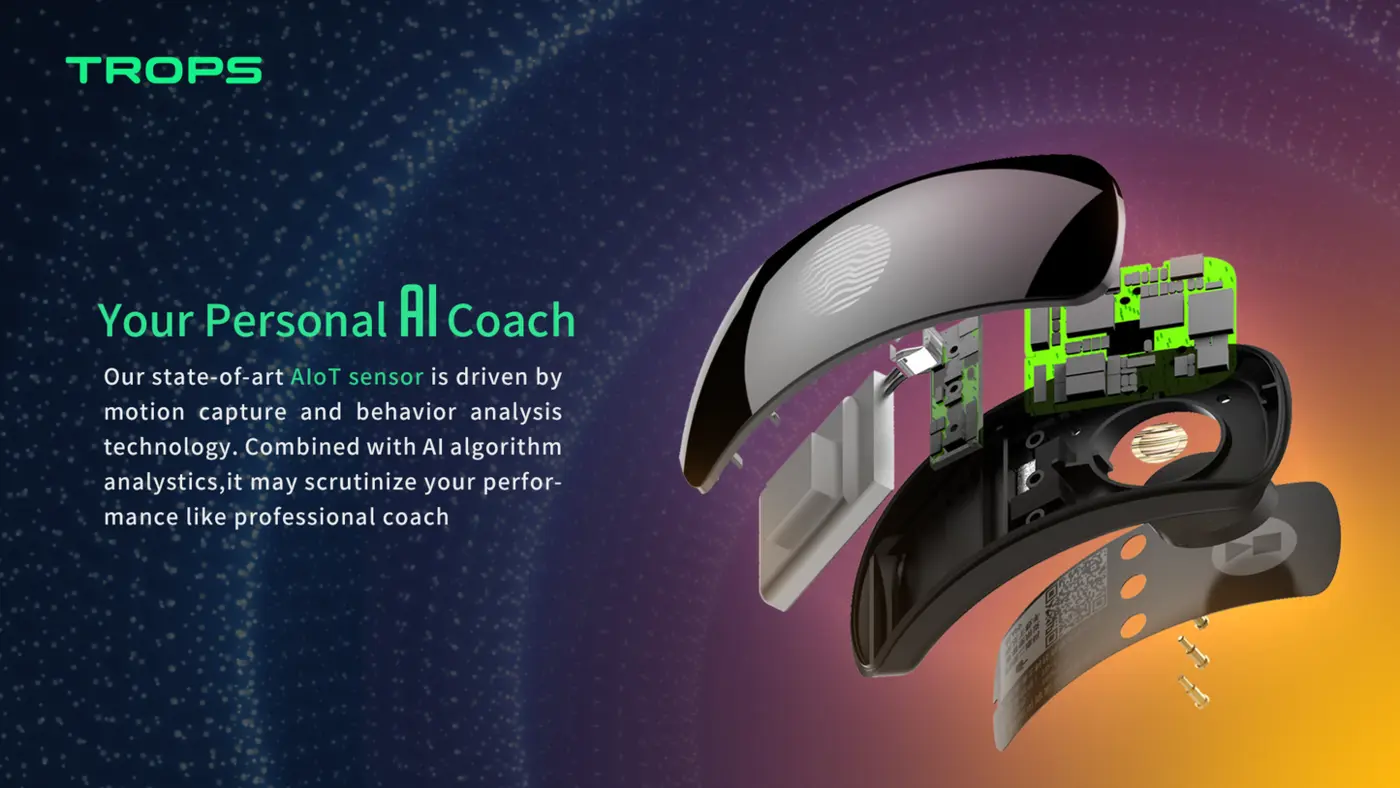
Data only helps when it changes what you do. Set simple rules: if a player's acute:chronic ratio spikes, reduce their volume. If sprint count is low for three consecutive sessions, add sprint work. If a player's distance drops sharply, ask questions. Modern platforms with AI reports make this easier — the software highlights the anomalies so the coach does not have to scan every number. For a squad of 20 players, look for a system that weighs around 12 grams, runs 8 hours on a charge, is IP67 waterproof, generates reports automatically and carries CE, FCC and RoHS certifications.
FAQ
What is a good high-speed running distance for a youth player?
There is no universal number — it depends on age, position and the system's speed thresholds. Track each player against their own baseline and position group instead.
How often should we review GPS data?
Daily for load decisions (who trains hard, who recovers), weekly for development trends, and monthly for planning the next block.
Can GPS data predict injuries?
It cannot predict with certainty, but sudden workload spikes and drops in output are statistically associated with higher injury risk — useful warning signs, not guarantees.
Want to bring these metrics to your club? Get a Quote at run.sportschool.com.cn/contact and our team will help you choose a tracking system that turns data into development.
Need help choosing the right equipment?
Talk to Our Export Team